

 By
By
You’ve probably heard of the Golden Circle, but this isn’t the only route you should consider for your campervan road trip. If North Iceland is on your radar, planning a Diamond Circle Iceland itinerary should be at the top of your list. It’s the perfect detour from the Ring Road, allowing you to take full advantage of the flexibility of campervan travel while enjoying the beauty of North Iceland.
Whether it’s your first time in Iceland or you’re looking for new places to go, the Diamond Circle doesn’t disappoint. Here’s everything you need to know to create your ideal itinerary.
What Is the Diamond Circle in Iceland?
Like the Golden Circle, the Diamond Circle is a route filled with dramatic, breathtaking natural sights that are well worth the detour. While it isn’t an official name for the road, it highlights the fact that you will see beautiful natural gems along your journey. It’s an easy self-drive itinerary that will take you to impressive locations.

Where Is the Diamond Circle Located and How to Reach It
The Diamond Circle Iceland self-drive often begins in Akureyri, North Iceland, though you can also start the journey from Húsavík if you are staying in the campground there. It is located to the east of Akureyri by about 30 kilometers (19 miles). Part of the journey is completed on the Ring Road with detours along roads 85, 862, and 848.
Why the Diamond Circle Is Perfect for a Campervan Trip
A Diamond Circle Iceland itinerary is the perfect addition to your campervan for quite a few reasons. In fact, once you get to know the route and everything it offers, you’ll quickly realize that it feels like it was made for a camping trip, particularly due to the following:
- A relatively short route with frequent stops
- A number of well-maintained campgrounds with great views and plenty of amenities
- Diverse landscapes without backtracking
- Fewer overall crowds, especially compared to the South Coast
- Ease of flexibility in case of poor weather conditions
- Easy to get a good mix of activity and relaxation
- Mostly paved roads for easier driving

How Long Does the Diamond Circle Take to Drive?
The entire Diamond Circle covers about 250 kilometers (155 miles), but you may drive more if you choose extra side trips from the route. If you didn’t stop at all, you could easily drive it in four to five hours. However, with all the beautiful landscapes, hikes of varying lengths and skill levels, and photo opportunities, you’ll find that you can easily spend all day or longer. In fact, you can easily spend two to four days fully exploring the area.
Because this route is so flexible with your timing, it’s the perfect option for your campervan itinerary. You can choose to spend longer at some stops or a shorter time at others, unless you decide to skip them altogether. It’s entirely up to you.
One-Day vs Multi-Day Diamond Circle Itinerary
As we’ve mentioned, the Diamond Circle Iceland itinerary can be completed in as little as a day, but you won’t find a shortage of things to do if you decide to slow it down and spend several days in the area. When traveling in a campervan, you get to choose the speed of your trip. You can see it all in one day before moving on, or take your time.
Ideal Pace When Traveling by Campervan
The ideal pace for your campervan trip depends on how much time you have and how much you want to see. While it can be done in a day if you just want to check off the main stops, the perfect amount of time for a leisurely campervan adventure to truly explore the area is two to three days.
One or two days gives you just the highlights, while three days gives you more of a balanced approach. If you have four days, you can enjoy a more relaxed pace with time to soak in geothermal pools and complete longer hikes.

Best Time of Year to Drive the Diamond Circle
The time of year you visit will play a significant role in how much time you need for the Diamond Circle at a minimum, and whether you can complete it. The following will help you determine whether you should add the Diamond Circle Iceland itinerary to your travel plans or save it for another trip.
Summer Driving Conditions and Midnight Sun
The absolute best time for a Diamond Circle Iceland self-drive tour is during the summer months. The driving conditions are much better, roads are unlikely to be closed, and you have nearly 24 hours of daylight to see everything you want to see. You’ll get the most out of this route from June to August.
The mild weather you are likely to experience in summer makes it easy to complete the hikes, see all the sights along the way, and enjoy the area at your preferred pace. Summer is one of the best times to explore the country in a campervan. All the campgrounds are open, and despite the higher tourist numbers, you generally don’t have to book them ahead of time.

Shoulder Seasons and Fewer Crowds
While summer is prime tourist season in Iceland, you can still often enjoy the Diamond Circle route during the shoulder seasons instead, particularly in the winter. Some of the roads may still be closed in the spring, but if you visit in the spring or fall, you can typically expect to complete the entire route without worrying about the weather negatively impacting your itinerary.
Visiting during the shoulder season means lower prices and fewer crowds while still getting good weather. Many of the campgrounds will be open in the fall, but keep in mind that some won’t open again in the spring until late May or early June. However, that doesn’t mean you won’t be able to find enough campgrounds to make the most of your campervan adventure.
Winter Driving Considerations and 4x4 Campers
Even though all of the main roads along the Diamond Circle route are paved, some of them don’t have winter service. This means that driving this route in the winter generally isn’t possible without making some modifications. However, that doesn’t mean you can’t see at least some of the parts of the Diamond Circle during the winter. You should rent a 4x4 camper, though, to keep you safer on the road.
In addition to snowy and icy road conditions, along with high winds, winter means fewer daylight hours. That means you’ll have to factor in more time for completing the Diamond Circle Iceland itinerary. Even with a 4x4 campervan, there may be times when you have to stay in one place while waiting for poor weather to pass. The trade-off is a high chance of Northern Lights, fewer tourists, and lower prices.

Diamond Circle Iceland Itinerary by Campervan
While you can certainly see all the main sights around the Diamond Circle in just one day if you’re limited on time, this area of Iceland deserves a slower itinerary. Whether you have two or three days to spend before moving on around the Ring Road, the following is a great starting point for your itinerary planning:
Day 1: Lake Mývatn and Volcanic Landscapes
On the first day of your Diamond Circle itinerary, you will spend the day in the Lake Mývatn area with the serene lake and plenty of volcanic landscapes after a stop at Goðafoss along the Ring Road. You won’t have to drive far to explore a variety of sights. This is one of the most geologically diverse and geothermally active parts of the country. Some of the stops you should consider on this day include the following:
- Lake Mývatn
- Skútustaðagígar
- Dimmuborgir Lava Fields
- Hverir (Námaskarð)
- Grjótagjá Cave
As you look for a place to spend the night, you have a couple of campsite options in this area. In Reykjahlíð, you can stop in the Mývatn Campsite or stay nearby in the Vogar Campsite, where things are a little quieter.
Day 2: Dettifoss, Ásbyrgi Canyon, and Surroundings
Your second day will be filled with waterfalls and magical canyons. Many of the stops on this day will require some hiking, but there are longer and shorter trails with varying difficulty levels to choose from, ensuring that everyone can find something to fit their requirements. The following are some of the top stops to make on your second day:
- Dettifoss
- Selfoss
- Various Jökulsárgljúfur viewpoints
- Ásbyrgi Canyon
When it’s time to settle in for the night, there are also several options in this part of the Diamond Circle. The Ásbyrgi Campsite is a great way to relax in the magic of the canyon. However, this campground is very popular in the summer, so you will likely need to book this one ahead of time. Another option is to move on to Húsavík to stay in the campground there and get a head start on your next day.

Optional Day 3: Húsavík and the Tjörnes Peninsula
Whether you spend the night in the Húsavík Campground or are driving from Ásbyrgi, you’ll find plenty of places to stop along the Tjörnes Peninsula. The route around the peninsula offers spectacular views of the ocean and scenic sea cliffs that house numerous seabirds, including puffins in the summer.
While there are no main stops along this part of the itinerary, you can be sure to have a packed day with plenty of photo stops and some time for exploring Húsavík. In fact, this is an ideal place to take a whale-watching tour or soak away at GeoSea.
If you stayed in Ásbyrgi, you may want to spend the night at the Húsavík Campground or move on to stay in Akureyri or beyond to continue your journey, whether you’re heading east or west.

Must-See Stops Along the Diamond Circle
The Diamond Circle Iceland itinerary is filled with must-see stops. Some of these stops are well-known among visitors, but some of them are lesser-known and easily missed if you don’t do your research before your visit. Let’s explore everything the Diamond Circle offers for your campervan adventure.
Lake Mývatn Area
The Lake Mývatn area is more than just a lake. While the lake itself is definitely one of the attractions, it is surrounded by lava fields and features some beautiful places that feel like they aren’t part of the Iceland you may have already gotten to know. You’ll also see a wide variety of birds out on the lake. However, this is one part of Iceland where you need to be aware of the midges, especially in the summer. Most are harmless, but some do bite.
Dimmuborgir Lava Fields
If you have some time to hike, Dimmuborgir is a must-do. When you arrive, you’ll walk down a trail to the start of all the other trails. You can choose from varying lengths and difficulties, each offering impressive views of lava fields with dormant volcanoes rising in the distance. You can even find the cave home of the Yule Lads, who make their appearance during Christmas.

Skútustaðagígar Pseudocraters
In the southwest corner of the lake, you can hike among the Skútustaðagígar Pseudocraters. This collection of craters rises out of the ground, contrasting beautifully with the surrounding lake. You can often find various birds nesting in the area during the summer months.
Grjótagjá Cave
On your way east out of Reykjahlíð, you can take a small detour to visit Grjótagjá Cave. You’ll enter a crack in a rock wall and find a secret hot spring nestled inside the cave. The clear water steams and fills the cavern with a mysterious atmosphere. While bathing was once allowed here, it is no longer permitted because of temperature fluctuations. You can also hike a few surface trails here.
Hverir (Námaskarð)
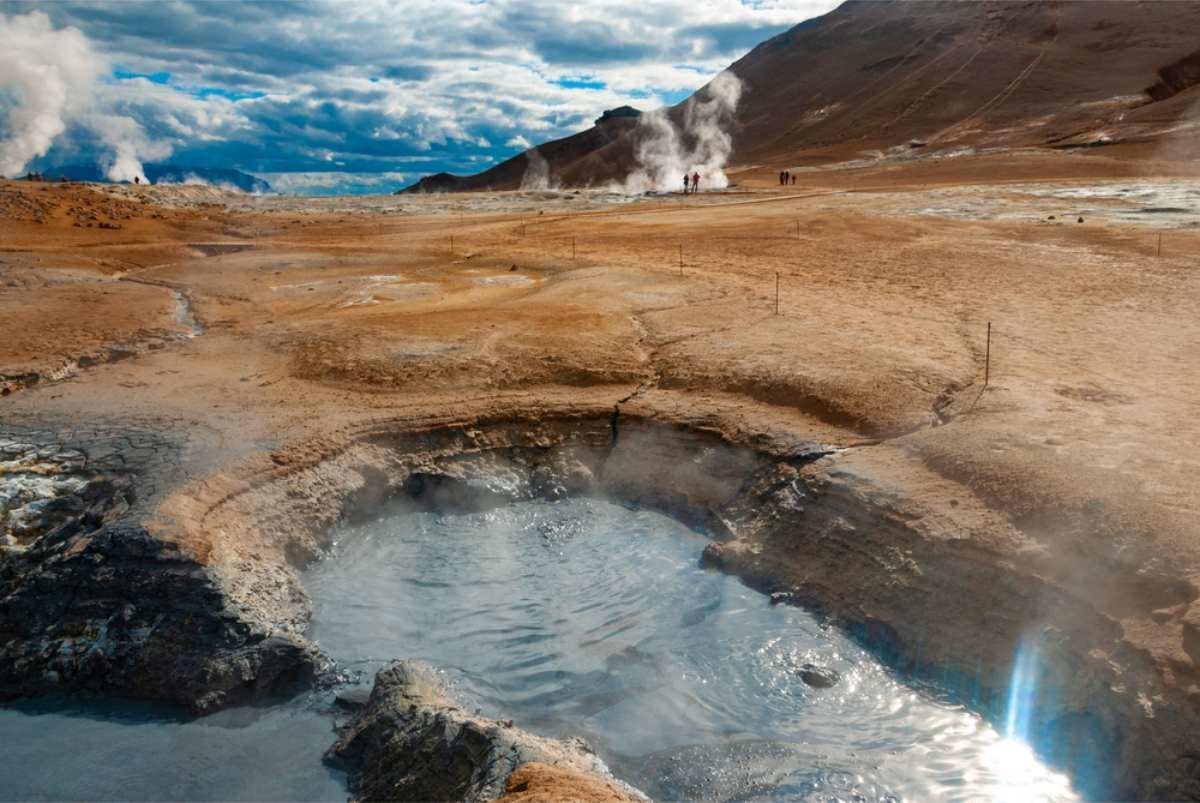
Along the Ring Road, not far from Lake Mývatn, you’ll see orange mountains and steam rising from the ground. This is Hverir, or Námaskarð. Here, you’ll see a variety of geothermal features, with hiking paths winding through hot springs, bubbling mud pots, and steaming fumaroles.

Dettifoss and Nearby Waterfalls
Iceland is a land of many waterfalls, over 10,000 of them. They are a big part of every route you will drive, including the Diamond Circle. After leaving the Lake Mývatn area, you will drive further north, passing numerous waterfalls along the way.
Dettifoss
Dettifoss is the first waterfall you will pass on your way north. It can be viewed from the east or west side of the river, but it’s important to keep in mind that the east side is unpaved and rough, making a 4x4 recommended. The west side is fully paved and maintained, except in the dead of winter.
Once you arrive at the parking lot, Dettifoss requires an easy hike through the lava fields to reach the river. This is one of the most powerful waterfalls in Europe and an impressive cascade of water deep into the canyon.
Selfoss
Selfoss is another waterfall that can be accessed from the same parking lots and trails as Dettifoss. Simply look for the signs indicating which way to go. This waterfall is a horseshoe shape and looks different from each side, so if you have extra time and the roads are open, it can be worth checking it out from both roads.
Hafragilsfoss
The road to Hafragilsfoss breaks off from the main road to the Dettifoss parking lot on the west side. This waterfall is visited less often, which means you are likely to have the hike to yourself or encounter fewer people along the way. It’s a great alternative to the busier Dettifoss or an extra stop to enjoy another of Iceland’s waterfalls.

Ásbyrgi Canyon
You’ve probably heard there are few trees in Iceland, but Ásbyrgi Canyon will prove otherwise. This horseshoe-shaped canyon is home to a small birch forest with easy, peaceful trails that lead to the Botnstjörn Pond at the end of the canyon. If you’re feeling a bit more adventurous, you can hike to the viewpoint at the top of the land mass in the center of the canyon or along the canyon rim.
There’s a reason why the campground in Ásbyrgi requires a reservation. It’s a popular spot to camp for locals and visitors.
Húsavík and Whale Watching
The final main stop along the Diamond Circle is the town of Húsavík. It may be a small town, but it has had a powerful impact on tourism in North Iceland. It’s known as the whale-watching capital, with numerous boats going out daily and an excellent track record for seeing whales.
In addition to whale watching, there’s plenty to see and do in and around town. For instance, if you’re looking for a place to soak with great views, GeoSea is on the outskirts of town. The cliffside infinity pool edge offers breathtaking views of the fjord while you soak in the warm, geothermal seawater.

Where to Sleep Along the Diamond Circle
Planning the stops on your Diamond Circle Iceland itinerary is just one part of the process. Now that you know where to go, you will need to know where to stop, especially if you’re driving a campervan. The following will help you find the best campgrounds to meet your needs and give you the experience you’re looking for.
Campsites for Campervans
Your best source for finding campsites for campervans around the Diamond Circle is tjalda.is. This website offers a comprehensive listing of many of Iceland’s campsites, organized by region. You can search based on opening dates, amenities, and locations to find places to sleep for the night.
Here are a few of the options to consider, but be sure to check the opening dates and status before planning your stay:
- Reykjahlíð/Lake Mývatn Campsite: Centrally located in the Lake Mývatn area with all the amenities you need.
- Vogar Campsite: A more natural campground located on the outskirts of Reykjahlíð.
- Hlíð Campsite: Another option close to Reykjahlíð, this campsite features family-friendly amenities and space for all types of campers.
- Camping Hljóðaklettar: A short distance north of Dettifoss, you can stay close to the river near Hljóðaklettar. It’s a peaceful campground with plenty of hiking trails nearby.
- Ásbyrgi Campsite: Ásbyrgi is one of the most scenic campgrounds in Iceland. There are two campgrounds, but both require reservations in the busy summer season.
- Camping 66.12 NORTH: This remote campground is on the north end of the Tjörnes Peninsula and is only open in summer. It offers breathtaking views of the ocean.
- Húsavík Campground: This campground keeps you close to town with all the amenities you need from a campground.
Wild Camping Rules and Legal Considerations
Wild camping was once legal in Iceland, but those days are long gone. The tourist boom and issues with littering and leaving waste behind led to legislation that significantly restricted and all but banned wild camping in the country. Today, if you are driving a campervan, you are legally required to stay in campgrounds overnight unless you have explicit permission from the landowner.
To avoid significant fines for wild camping, you should have a list of campgrounds to consider during your trip. In general, you don’t have to book most campgrounds ahead, with a few exceptions like Ásbyrgi, but it’s good to know where you can go, especially if you are visiting outside the prime camping season.
Practical Tips for Driving the Diamond Circle in a Campervan
Driving the Diamond Circle in a campervan is relatively straightforward, especially if you visit during the summer or the shoulder seasons. In winter, you may need to adjust your itinerary around road closures, primarily the road to Dettifoss. However, that’s not the only thing you need to consider as you plan your trip.
Road Types, Fuel Stops, and Distances
For the most part, the roads around the Diamond Circle are paved and well-maintained, with the exception of the eastern road to Dettifoss and other side trips you may take. This means you can usually drive the route with any campervan. However, if you want to visit the east side of Dettifoss or are traveling in the winter, a 4x4 is recommended.
Fuel stops can be more difficult to find in this part of the country. We recommend keeping your tank full whenever possible. If you see a gas station, top off the tank. You should fill up in Akureyri before starting the route, then be sure to fill up your tank in Reykjahlíð and
Húsavík, even if you still have plenty of fuel. This will avoid problems finding fuel.
Finally, the entire route is about 250 kilometers (155 miles), and you generally won’t drive more than 30 to 90 minutes between major stops (30-60 kilometers), less if you stop at more locations. This means you can easily do the Diamond Circle in a shorter time, but can also stretch your itinerary over several days if you want to slow down and enjoy the experience.

Weather, Safety, and Vehicle Choice
The weather in North Iceland can be more volatile than in other parts of the country. The open spaces can be quite windy, and winter weather generally lasts longer in this part of the country. Be sure you check the weather and road conditions often as you travel through the Diamond Circle and adjust your plans as needed. Remember, campervans are larger vehicles and can’t handle significant wind well.
The good news is that the Diamond Circle is a well-established route and mostly paved, ensuring easier driving. However, you will still need to take appropriate precautions to keep safe. In addition to checking road and weather conditions, do the following:
- Park facing the wind to prevent door damage
- Hold your doors firmly
- Don’t drive on F-roads unless you have an approved vehicle
- Drive slowly on gravel roads
- Watch for sheep in the road, especially in summer
In summer, you can easily drive this route with any campervan. However, if you’re visiting in winter or want to drive some of the more challenging roads, a 4x4 can be the best solution. If you’re not sure, talk to us at Camper Rental Iceland for recommendations.

Is the Diamond Circle Worth It Compared to the Golden Circle?
Have you already done the Golden Circle and are wondering if the Diamond Circle is worth it? Maybe you only have time for one and need to decide. Perhaps you’re just curious. Here’s a side-by-side comparison of the two routes, but in our opinion, they’re both worth doing if you have the time:
|
Golden Circle |
Diamond Circle |
|
|
Crowds/Atmosphere |
More crowded, large tour buses, limited quiet |
Lower crowds, more space, an immersive experience |
|
Landscape |
Famous landmarks located close together |
More variety: waterfalls, canyons, volcanic fields, geothermal areas, coastline |
|
Driving Experience |
Short distance, easy day trip or less |
Longer distances, easy to stretch over multiple days |
|
Campervan Friendliness |
Fewer campsites, more crowded parking |
Good campsites, easier parking |
|
Activities |
Focused on sightseeing, some hikes, snorkeling, snowmobiling |
Plenty of sightseeing, whale watching, numerous hikes, geothermal bathing |
|
Seasonal Access |
Easy to access year-round |
Best done between May and September |
Diamond Circle Iceland FAQs
Still have questions? Here are some of the most frequent questions we get from renters:
Do I need a 4WD campervan?
Most people will not need a 4WD campervan to drive the Diamond Circle route. However, if you plan to drive any F-roads or are visiting in the winter, it can be useful to have one.
Are the roads safe for first-time campervan drivers?
Yes, most of the roads in the Diamond Circle are paved and easy to drive, even for first-time campervan drivers. However, you should monitor the weather and road conditions and adjust your travel plans accordingly.
Can I park overnight at attractions or parking lots?
No, you are required to stay overnight in a campground if you are traveling in a campervan. Make note of campgrounds available in your season, and check if you need reservations.
What if the weather is bad?
If there is a weather warning or you are advised not to drive, be prepared to spend an extra night where you are. You may need to skip certain viewpoints or consider a different route if the weather interferes.
Are there campervan services along the route?
Yes, you can find supplies, but they will be more limited along this route. Stop for fuel and groceries in the towns of Akureyri, Reykjahlíð, and Húsavík. Most campgrounds have showers, and some have laundry and kitchen facilities.
Are you ready to get started with your Diamond Circle Iceland itinerary? Renting a campervan is one of the best ways to see the country at your own pace, including this picturesque route.


