

 By
By
In many countries, private property is private and shouldn’t be entered without explicit permission from the owner. However, Iceland, like many other Nordic countries, has laws called Almannaréttur. Iceland’s right to roam is governed by the Nature Conservation Act and differs significantly from other Nordic countries, particularly regarding campervans and other vehicles. Here’s everything you need to know.
What Does the Right to Roam Mean in Iceland?
In general terms, Iceland’s right to roam refers to the right for travelers to access nature, with the stipulation that they leave no trace. That means taking all your trash with you and taking care not to damage the sensitive environment. However, you won’t need special permission to enter and traverse uncultivated private property.
There are some exceptions to this rule. Protected areas can close at times due to breeding or sensitive growth periods. Cultivated farmland is also prohibited, and landowners can limit access to their land with signs or other markings.
For campervan travelers, the right to roam means daytime access to nature is generally permitted, but overnight stays fall under separate restrictions.
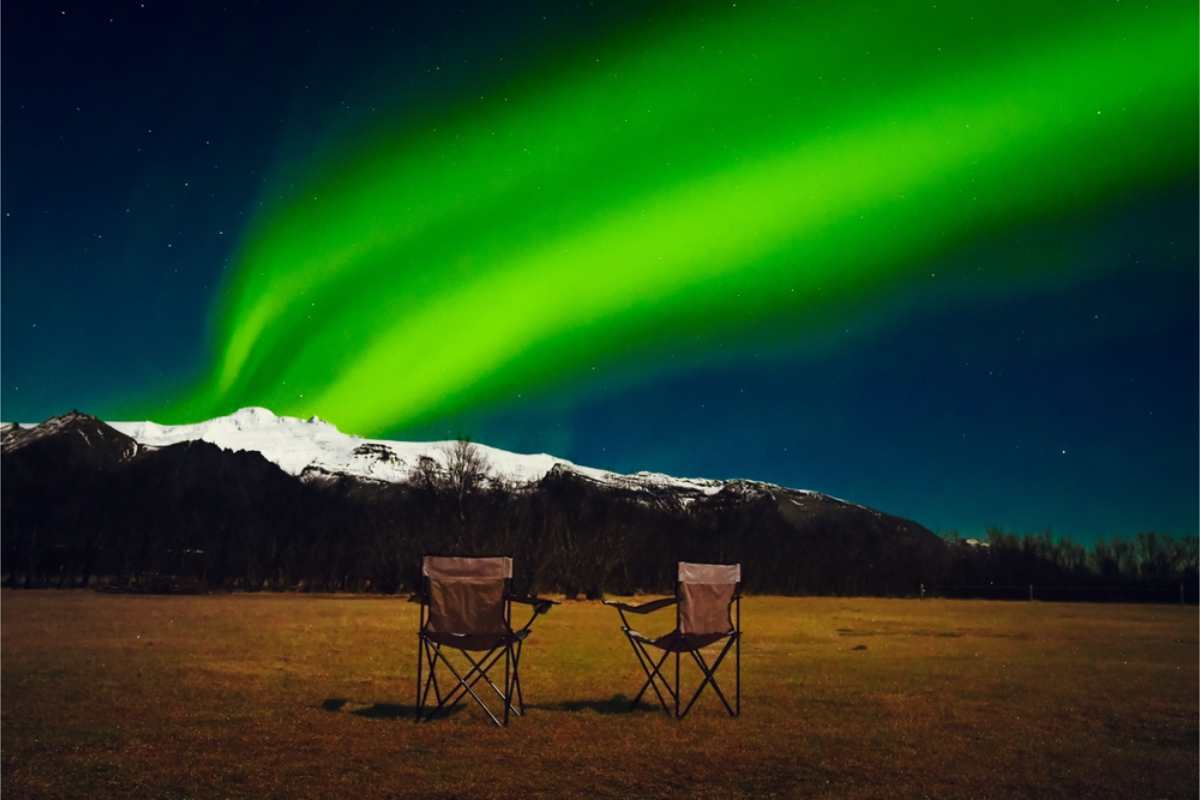
Is There a Right to Wild Camp in Iceland?
Iceland’s right to roam laws differ from their Nordic counterparts in one very big way. Under amendments to the Nature Conservation Act in November 2015 and again in 2017, overnight stays in camping vehicles outside designated campsites are prohibited unless explicit landowner permission is granted.
Visitors, especially those traveling in a campervan, are no longer allowed to park and camp wherever they please without permission from the landowner.
Why Wild Camping Laws Changed in Iceland
Iceland had good reasons to reevaluate its wild camping laws. When the tourist boom began, locals started to see a major problem. The infrastructure in Iceland wasn’t built for the number of tourists visiting, and too many people were careless with the environment. They left their trash and waste everywhere. But that wasn’t the only reason for this change. It was also for:
- Environmental protection
- Protecting private landowners
- Reducing off-road driving
In addition to leaving trash behind, more people in campervans were stopping for the night on private land, and others were driving to more remote locations, leaving the marked roadways and damaging the sensitive vegetation. These impacts prompted the legislative amendments to the Nature Conservation Act.
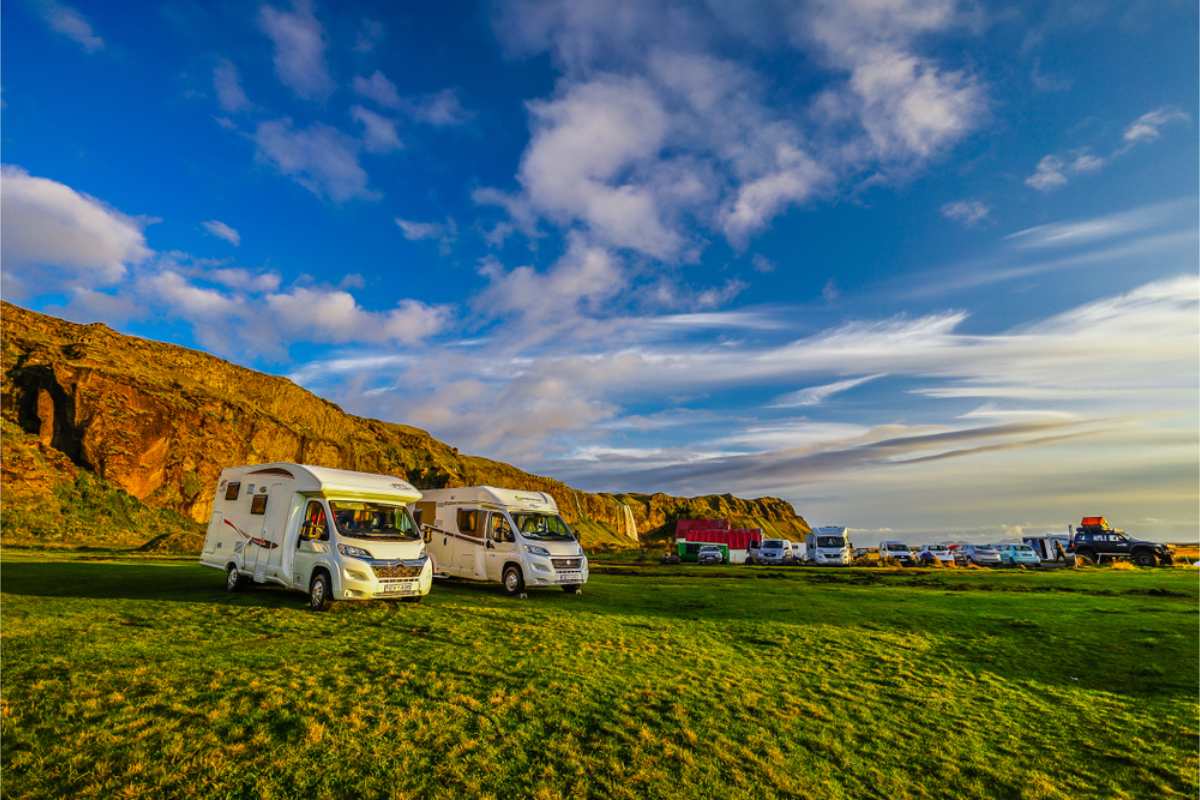
Can You Sleep in a Campervan Anywhere in Iceland?
The wild camping rule change in Iceland primarily targeted those traveling in a vehicle like a campervan. In short, the law dictates that if you are driving, you must stay overnight in a designated campsite unless you have explicit landowner permission. There are more than 200 registered campgrounds in Iceland, so even if you travel in winter when many campgrounds are closed, you can find one nearby.
Overnight Parking vs Camping: What’s the Difference?
Are you wondering if you can park overnight outside a campground when you rent a campervan? In simple terms, if you’re planning to sleep in your campervan, you are camping and must stop in a designated campground. However, if you need to park the campervan to spend the night in other accommodations, you are allowed to park overnight wherever other cars can park, such as parking lots or city streets. The difference is whether you plan to sleep in your campervan.
Where Camping Is Strictly Forbidden in Iceland
Driving in a campervan in Iceland maximizes flexibility, but you will still need to know where the campgrounds are and where you can’t camp based on Iceland’s laws. It’s best to plan to stay in campsites, but you should know some basic guidelines that will dictate whether you can stay the night.
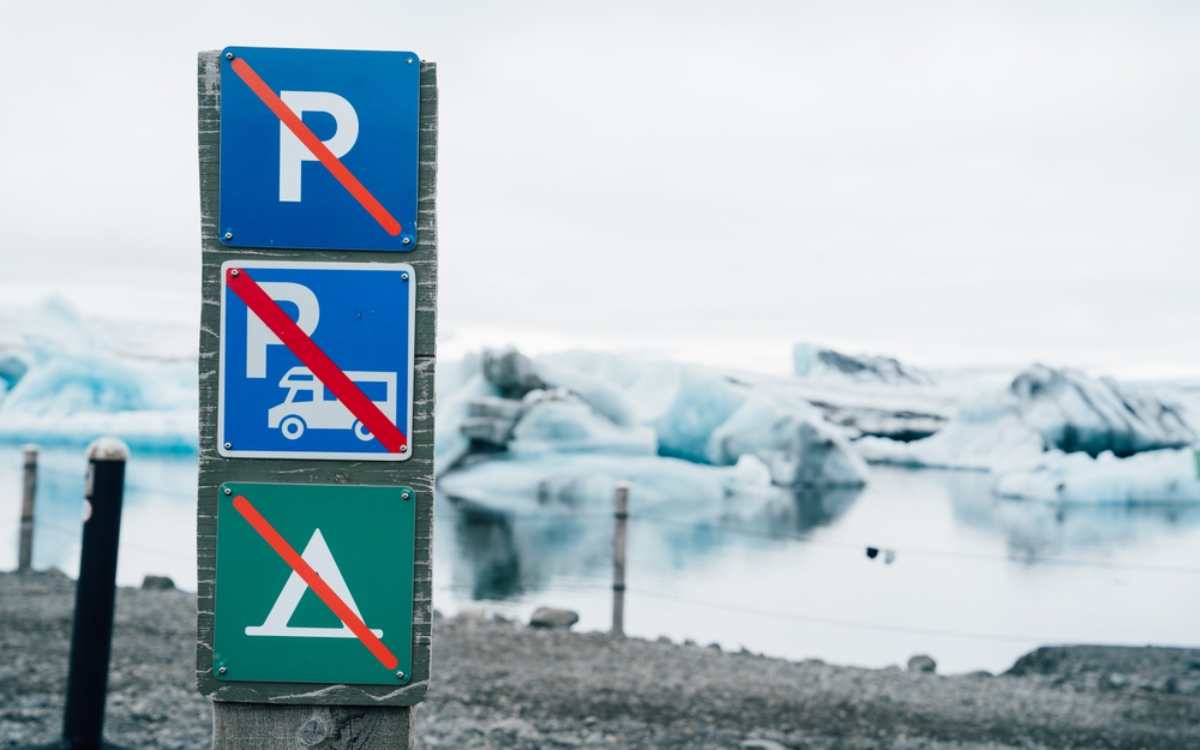
National Parks and Protected Areas
First and foremost, any national parks and protected areas are strictly off limits for camping outside designated campgrounds. These areas fall under environmental conservation laws and must be respected as such.
Roadsides, Parking Lots, and Private Land
The biggest issue that brought about the change to Iceland’s right to roam laws regarding camping with a campervan was an influx of people stopping for the night along the roadside, in parking lots, and on private land. Today, these areas prohibit camping in a vehicle, regardless of whether there is a sign posted.
Roadsides and parking lots are never a suitable place to stop for the night. However, if you get permission from a private landowner to spend a night on their property, you can stay there with your campervan. Keep in mind that you will need to locate the person who owns the land, and they do have the right to say no. If they decline, respect their wishes and move on.
When Is Camping Outside Campsites Allowed?
Wild camping is still allowed in some very specific situations. However, having a campervan or another type of camping vehicle often falls outside these exceptions. If you’re still interested in wild camping in Iceland, you will need to familiarize yourself with the acceptable conditions to do so.
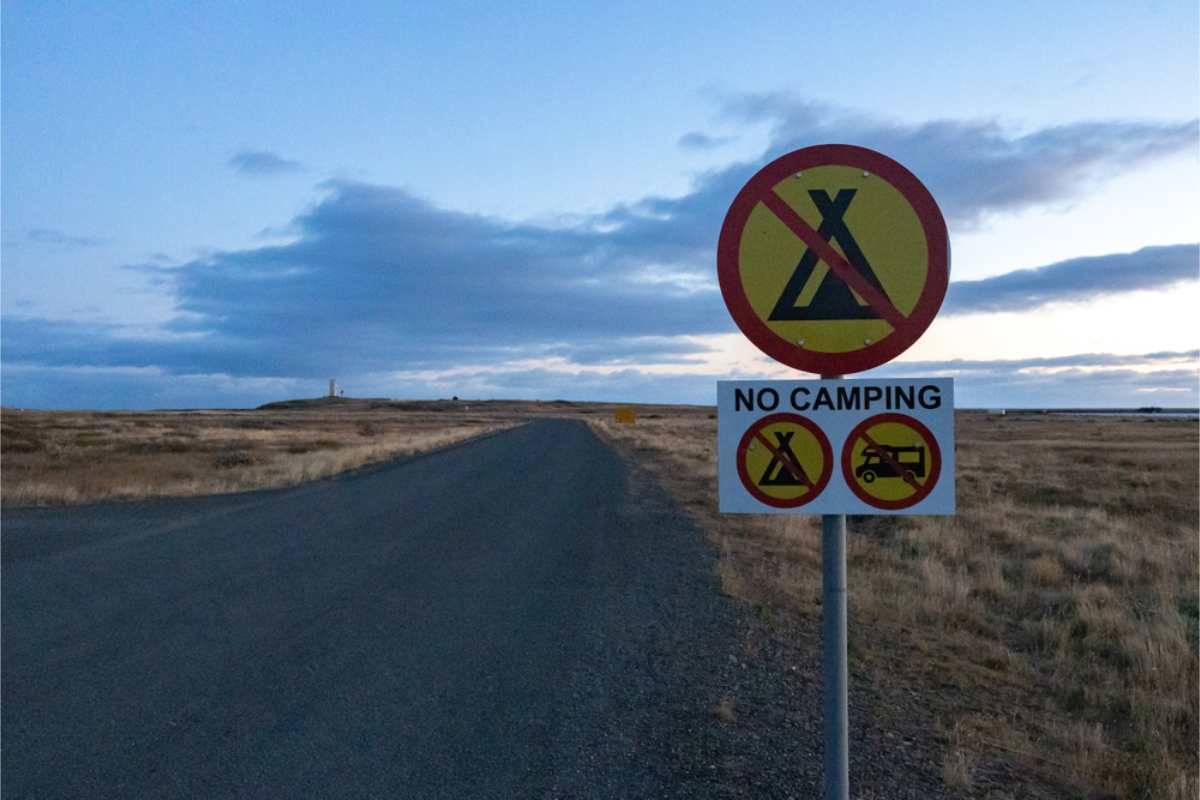
Rare Exceptions for Tents on Uncultivated Land
You are allowed to pitch a tent on uncultivated land for one night if you are traveling:
- Along public routes in an inhabited area without access to a nearby campsite.
- On public routes in an uninhabited area.
- Away from public routes
In addition to meeting the above criteria, you must watch for signs that indicate you are not allowed to camp. The government and landowners can post such signs on gates or walkways to indicate that camping isn’t allowed in that location. You will also need to get special permission if you:
- Are near a home or farm
- Want to stay more than one night
- Pitch more than 3 tents
- Are on cultivated land
If you are traveling in a campervan, these tent-based exceptions do not apply to you.
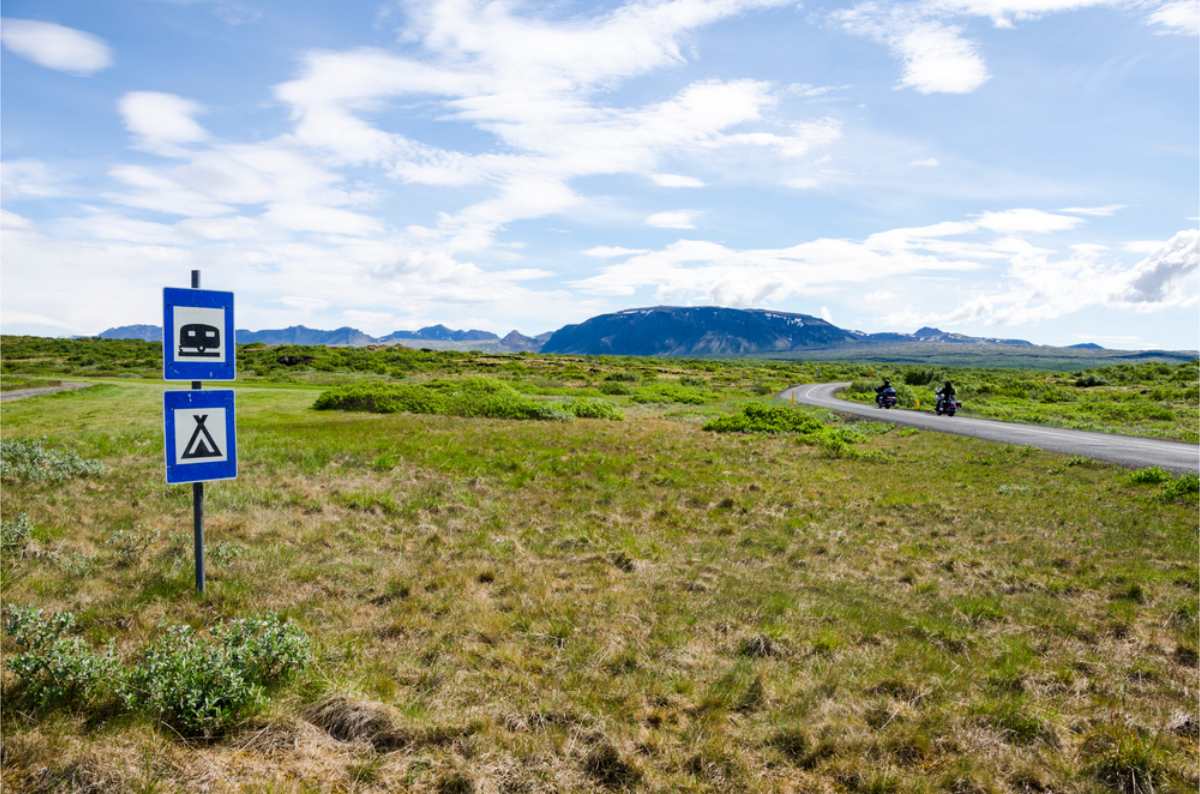
Campsites in Iceland: The Legal and Practical Alternative
Iceland maintains a well-developed network of over 200 registered campgrounds. In most regions, a registered campground is within reasonable driving distance, giving you the ultimate flexibility while respecting the local laws.
Why Campsites Are Designed for Campervans and Motorhomes
Although some travelers view the campsite requirements as restrictive, they provide essential infrastructure for waste disposal, sanitation, and environmental protection. While campgrounds often don’t have designated spaces, you’ll always find a place to park up for the night, sometimes with protection from the wind and elements via tree breaks.
Campgrounds also have plenty of amenities like toilets, showers, laundry facilities, cooking facilities, dump stations, and sometimes electricity. You won’t have to worry about where to dispose of waste or how to clean up from your day of sightseeing or hiking. You can find a list of most Icelandic campgrounds on tjalda.is, along with opening dates, amenities, and costs. Some campgrounds can be booked in the Parka app, but reservations are generally not required.
Even though you must stay in designated campgrounds with your campervan, your costs will still be reasonable. Campgrounds generally cost between 1500 and 3500 ISK ($12-$28 USD/10-24 EUR) per person per night. Some campgrounds charge extra for electricity with limited hookups, while others may charge around 300-500 ISK ($2.50-$4 USD/ 2-3.5 EUR) for showers.
You can further save money with the Camping Card, which costs 179 EUR ($210 USD). This card includes up to 28 nights at the included campgrounds, saving you money on longer trips. This card is valid for stays from May/June until mid-September.
| Expense Type | Cost (ISK) | Cost (USD) | Cost (EUR) | Notes |
|---|---|---|---|---|
| Campground fee (per person/night) | 1,500 – 3,500 ISK | $12 – $28 | €10 – €24 | Standard range for most campsites |
| Electricity hookup | Varies by campground | Varies | Varies | Limited availability; not all sites offer it |
| Shower fee | 300 – 500 ISK | $2.50 – $4 | €2 – €3.50 | Charged at some campgrounds |
| Camping Card (one-time purchase) | – | $210 | €179 | Covers up to 28 nights at participating campgrounds. Valid May/June to mid-September. |
Right to Roam and Responsible Campervan Travel
Iceland’s right to roam mainly addresses the ability to access nature on foot, but it also applies to campervan travel. While it restricts your stay to designated campgrounds, it opens up the possibilities for sightseeing throughout the day. Knowing how the rules apply to you helps you be a more responsible traveler.
How Following the Rules Protects Iceland’s Nature
The most important reason to make yourself aware of Iceland’s right to roam is to protect its nature for future generations. Nature is the main attraction, and it’s up to everyone to do their part to keep it pristine. Traveling by campervan lets you get up close and personal with nature, but it asks for your respect in return.
Pay close attention to signs posted by landowners and respect their requests. Always close gates behind you and stay on marked trails. The goal is to enjoy nature while protecting the sensitive environment. Finally, always pack your trash out with you. Leave nothing behind. Iceland and the locals will thank you!
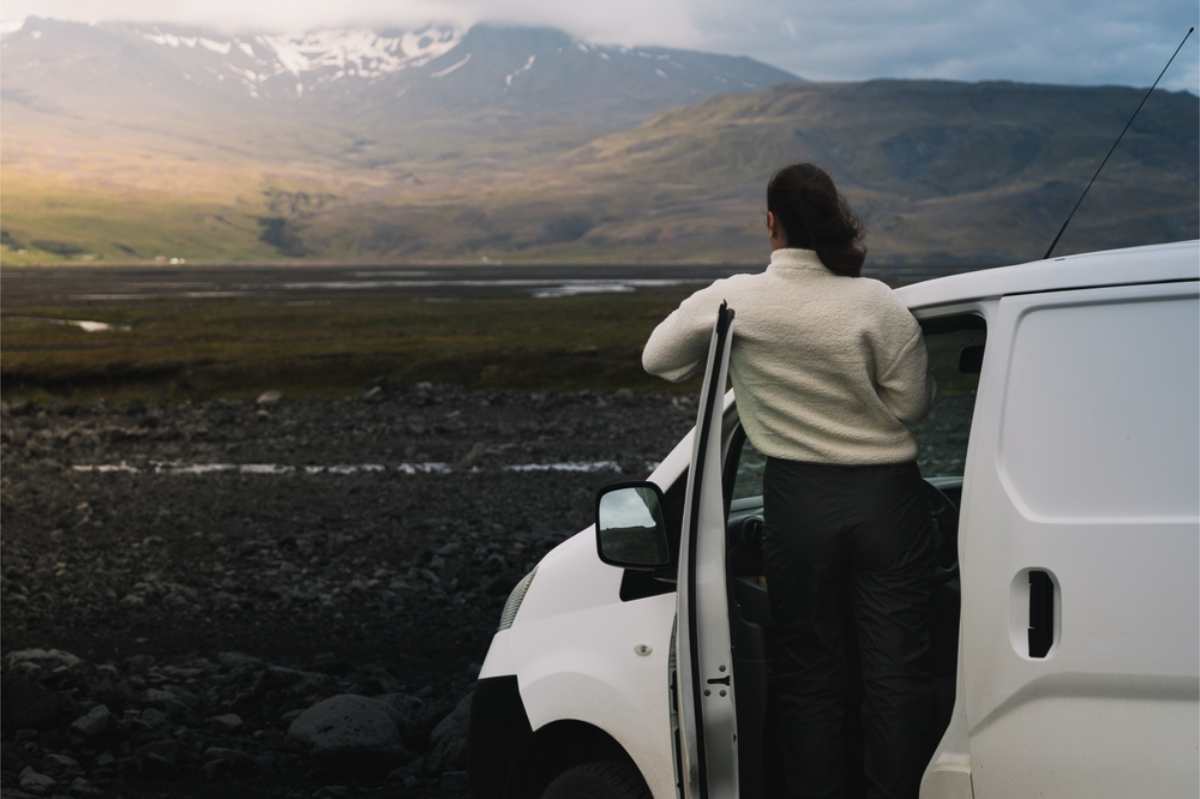
Camping Under the Northern Lights: What Is Actually Allowed
Chasing the Northern Lights doesn’t exempt campervan travelers from the campsite requirements.
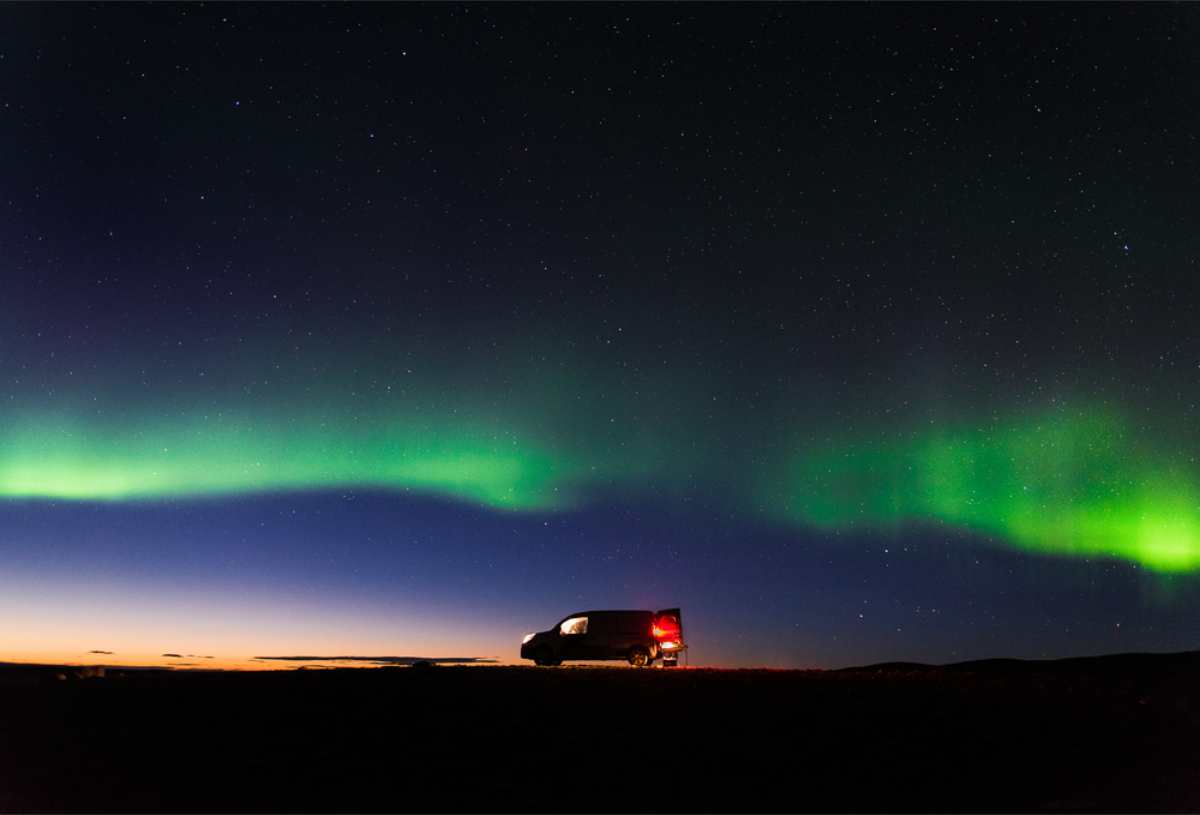
To see the Northern Lights, you often have to get away from the city lights. While there are plenty of guesthouses and hotels in quieter areas, camping under the night sky is another great way to see them. Many of the country’s campgrounds are located in more remote areas away from towns, giving you the benefit of staying in a darker area.
However, you can’t simply pull into a random dark roadside parking lot and sleep. Short roadside stops for sightseeing and Northern Lights viewing are generally permitted where parking is allowed, but staying overnight constitutes camping and requires a designated campground.
Your biggest challenge is finding campgrounds that are open year-round. Despite many campgrounds being seasonal, you are still required to spend the night in one while traveling in a campervan. Keep in mind that some amenities at campgrounds, such as water or electricity, may not be available, even though they are open for spending the night.
If you are renting a campervan in winter and are looking for places to stay, some open options include the following:
- Skaftafell
- Hveragerði - Reykjamörk
- Úthlíð í Biskupstungu
- Egilsstaðir
- Djúpivogur
- Blönduós
- Reykjavík
- Hamrar in Akureyri
- Grundarfjörður
- Tjaldsvæðið við Skógafoss
- Sandgerði
No matter where you are in the country, you can find an open winter campground within reasonable driving distance. You can find open campgrounds by filtering the list on tjalda.is by “open year round.” Winter isn’t prime camping season, but when the northern lights are a priority, a campervan can be the best choice to increase your chances.
Common Misconceptions About Wild Camping in Iceland
Myth: You can park your campervan anywhere to sleep.
Reality: You are legally required to stay in a designated campground for the night, unless you have explicit permission from the landowner.
Myth: The right to roam means complete freedom.
Reality: Wild camping is restricted for campervans. The right to roam applies more to travel on foot, including day hikes and multi-day hikes.
Myth: Wild camping is harmless and doesn’t affect anyone.
Reality: Iceland’s environment is delicate and takes a long time to heal. Staying in campgrounds minimizes damage.
Myth: You won’t get fined for staying outside campgrounds.
Reality: Rules are strictly enforced. Fines start at 50,000 ISK ($406 USD/345 EUR) but can be higher.
Myth: There’s no sign, so it must be allowed.
Reality: Camping in a campervan outside a designated campground is prohibited by law, even if there are no signs.
Myth: If I’m just sleeping, it doesn’t count as camping.
Reality: Sleeping overnight in your campervan is considered camping and is treated as such.
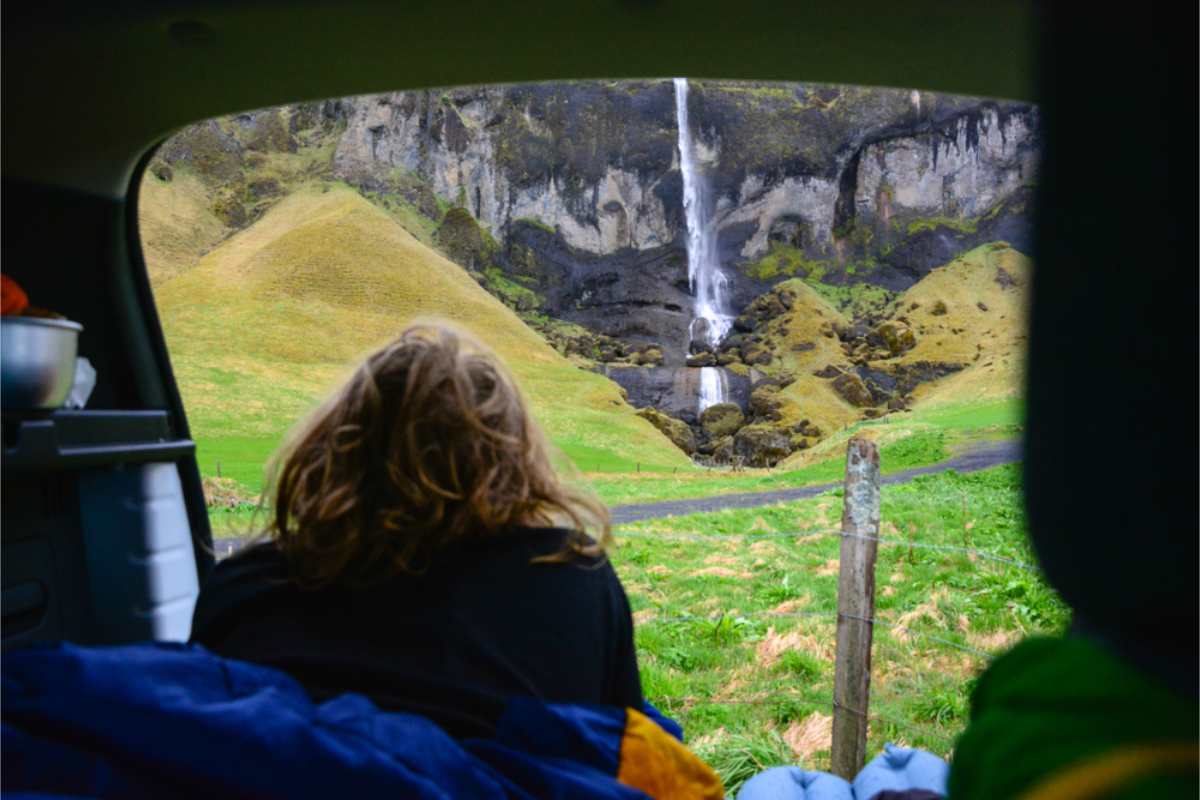
Final Advice for Renting a Campervan in Iceland
Iceland is a place that demands flexibility and respect. Renting a campervan in Iceland is an easy way to enjoy the beautiful nature with the ability to adjust your plans. However, because you must stay in campgrounds, you should plan your daily driving distance accordingly and map out potential campsite locations before your trip.
In addition to knowing where you can camp, we recommend checking the weather daily and adjusting your travel plans accordingly to help you get the most out of your trip. Remember, the right to roam gives you full access to everything Iceland offers, but you must do your part by only emptying your wastewater tanks at designated dump stations and always staying on the marked roads during your travels.


