

 By
By
As of 2026, Iceland’s gas prices average about $1.67 per liter for gasoline and roughly $1.81 per liter for diesel. For a full Ring Road drive of around 1,332 km, most people renting a camper in Iceland should expect to spend approximately $250 to $400 on fuel, depending on vehicle size and driving conditions.
Prices are generally consistent across the country, though remote areas can run slightly higher. In this guide, we break down what those numbers mean in practice. You will see how vehicle type affects fuel consumption, how routes like the Highlands increase costs, and how to budget realistically before arrival. Fuel is not the biggest expense of an Iceland trip. But miscalculating it is common.
Current Fuel Prices in Iceland (Updated 2026)
|
Fuel Type |
Price per Liter (USD) |
Price per Gallon (USD) |
|
Gasoline |
$1.67 |
$6.32 |
|
Diesel |
$1.81 |
$6.85 |
- Prices update frequently and are displayed clearly at all stations.
- Differences between major brands are typically small.
- Expect slightly higher pricing in isolated areas such as the Westfjords or interior routes.
Diesel vs Gasoline at the Pump
- Diesel is usually priced slightly above gasoline per liter.
- Many campervans use diesel because long-distance consumption is lower.
- Pump price alone does not determine total fuel cost.
Fuel Cost Snapshot: What This Means for a Typical Iceland Trip
Fuel prices in Iceland matter most when translated into route distance and vehicle size. Below is what that looks like in practice.
|
Scenario |
Distance |
Vehicle Type |
Estimated Fuel Used |
Estimated Cost (USD) |
|
Ring Road |
1,332 km / 828 mi |
2WD Camper |
130-160 L |
$220-$300 |
|
Ring Road |
1,332 km / 828 mi |
4x4 Camper |
150-190 L |
$260-$350 |
|
West + South (7 days) |
900 km / 560 mi |
Compact Camper |
90-120 L |
$150-$220 |
Important: These ranges assume mixed driving on paved roads at steady speeds. Exact consumption depends on vehicle model and driving style.
Diesel vs Gasoline: What We See in Practice
Fuel type at the pump matters less than actual consumption over distance and vehicle configuration when you are planning your fuel budget in Iceland.
What Fuel Types Appear in the Fleet
- Compact camper vans based on models like the Fiat Doblò and Dacia Dokker often use diesel engines, which are more efficient over sustained driving than equivalent petrol versions.
- Larger vehicles built on commercial platforms such as the VW Transporter or similar vans are typically diesel-powered in everyday camper builds.
How Vehicle Size Influences Consumption
Fuel use rises with:
- Vehicle weight
- Supple suspension and accessories
- Aerodynamic drag at higher speeds
In broad terms:
- Smaller camper vans consume less fuel on paved routes.
- Full-size vans and motorhomes use more fuel because of their weight and surface area.
Relative Fuel Consumption by Vehicle Type
|
Vehicle Type |
Typical Fuel |
Relative Consumption |
Best For |
|
Compact camper van |
Diesel |
Low to Moderate |
Ring Road, paved routes |
|
Larger camper van |
Diesel |
Moderate to High |
Longer trips, more space |
|
Full motorhome |
Diesel |
High |
Families, more living space |
What This Means for Your Decision
- Diesel-based campers combine range and efficiency for long drives such as the Ring Road or multi-day loops.
- Bigger builds deliver more room but naturally burn more fuel per 100 km.
- Fuel type is one part of the equation; the vehicle’s overall weight and design set consumption first.
Why Fuel Prices Are Higher in Iceland
Iceland’s gas prices are structurally high, and taxation is the primary reason. According to reporting by Mbl.is and data from gasvaktin.is, more than half of the pump price goes to government taxes.
In recent updates, carbon tax adjustments increased the tax share further, with over 50 percent of each liter’s price attributed to VAT, carbon tax, and excise duties. Industry representatives, including the CEO of Skeljungur, have publicly stated that taxation is the dominant factor behind Iceland’s global fuel ranking.
Beyond taxes, other structural factors apply:
- Iceland imports all fuel.
- Distribution occurs across a large, sparsely populated landmass.
- Environmental requirements mandate specific additives.
- Retail markup and VAT are applied after wholesale pricing.

How Fuel Costs Change With Your Route
Fuel consumption in Iceland is not just about distance. Surface type, elevation, wind, and season all influence how much you burn per 100 km.
Ring Road Driving
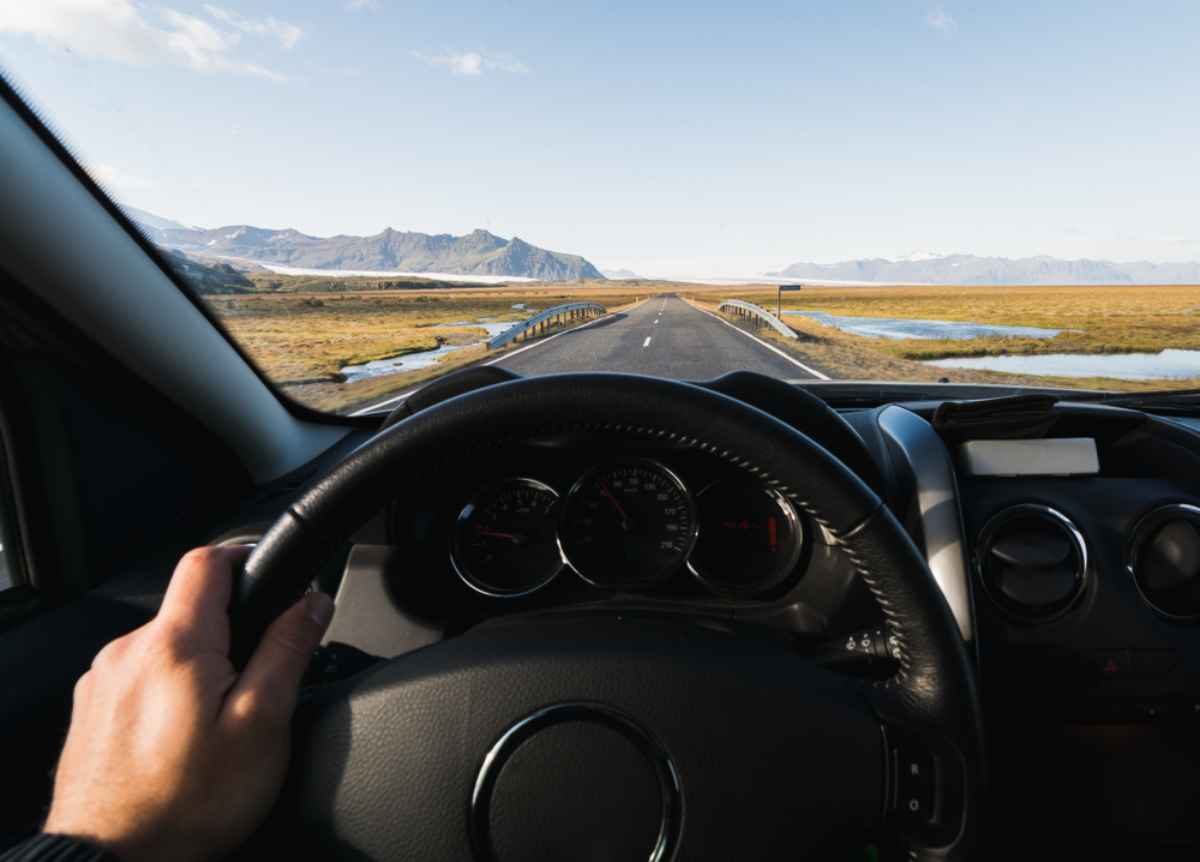
- The Ring Road is predominantly paved.
- Long stretches of steady-speed driving.
- Fuel stations are available at regular intervals.
- Consumption is generally predictable in compact 2WD campers.
Highlands and F-Road Driving
- Gravel surfaces increase rolling resistance.
- Steeper gradients require higher engine load.
- Lower gear driving increases RPM usage.
- Fewer fuel stations, requiring longer planning intervals.
- Highlands routes demand 4x4’s, leading to higher fuel consumption

Winter Driving
- Cold starts increase fuel use.
- Idling for heat adds to consumption.
- Snow, ice, and wind reduce efficiency.
- Route closures may require detours.
What This Means for Planning
- Paved summer routes offer the most predictable fuel budget.
- Highlands travel increases both fuel use and logistical planning.
- Winter driving requires a buffer in your fuel budget.
Where and How to Refuel in Iceland
Fuel stations are widely available along the Ring Road, but spacing increases significantly in remote regions. Using a reliable map of gas stations in Iceland before long rural stretches prevents unnecessary detours.
Station Basics
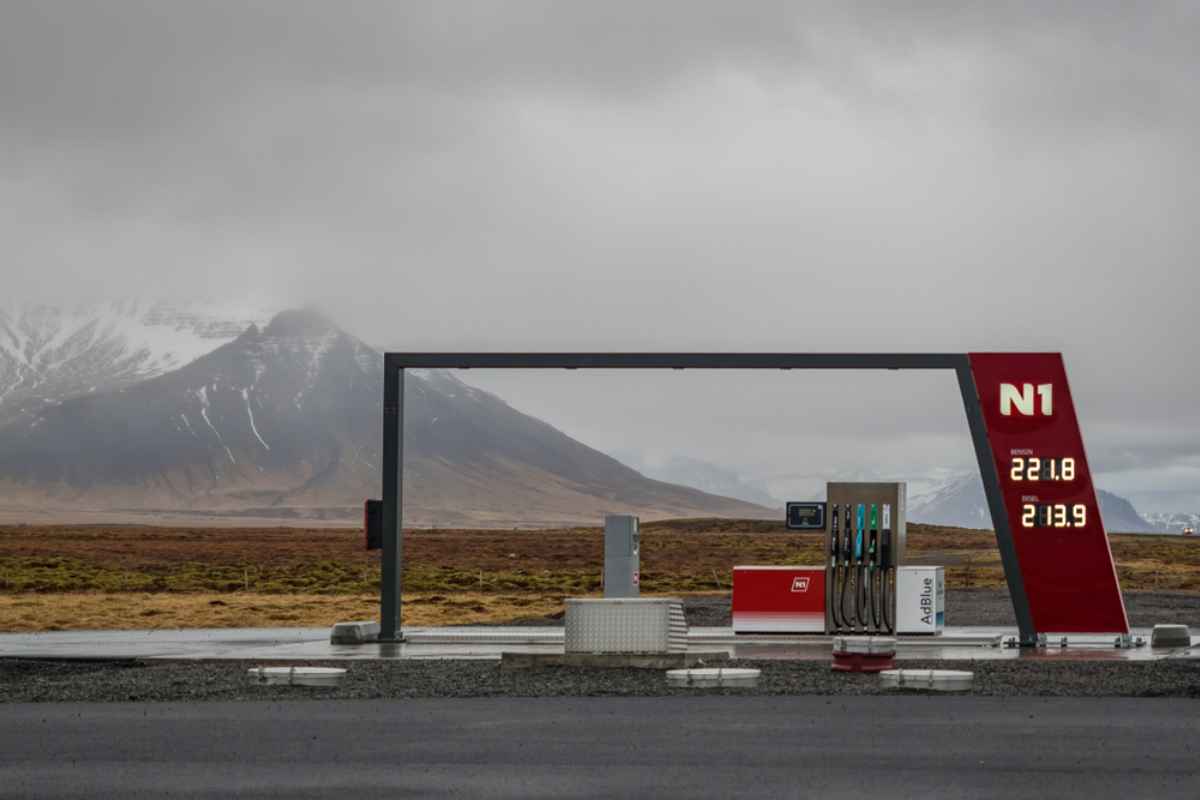
- Most major stations such as N1, Ólis, and Orkan operate self-service pumps.
- Card payment is standard. Major international credit cards are accepted.
- Pumps operate 24/7 even when station buildings are closed.
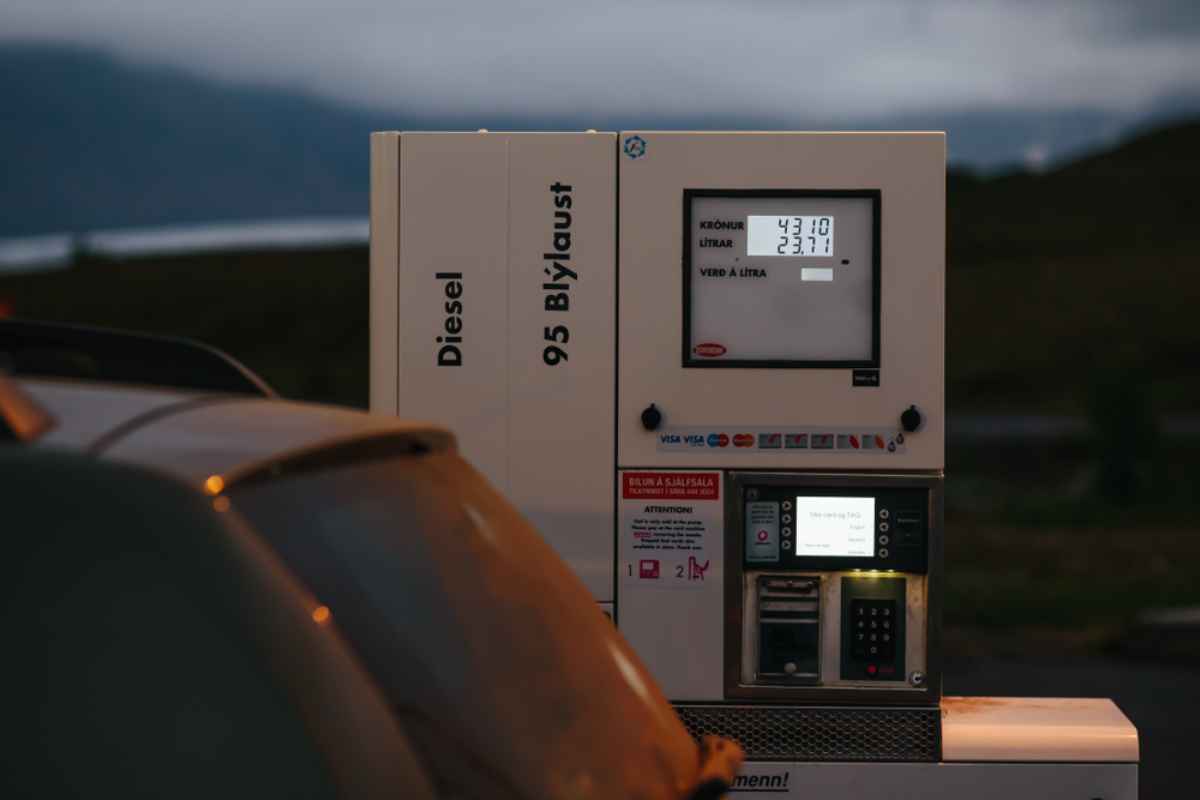
- Authorization happens at the pump before fueling.
- Diesel and gasoline are clearly labeled. Always confirm fuel type before dispensing.
Coverage and Spacing
- On the Ring Road, stations typically appear every 50-100 km in populated areas.
- In regions such as the Eastfjords or parts of North Iceland, gaps can exceed 200 km.
- Highlands routes have very limited fuel access and require advance planning.
- We advise topping up before entering sparsely populated stretches.
- Waiting until the warning light appears is not a good strategy here.
Keflavík Airport Pickup Planning
Our primary pickup location is near Keflavík International Airport
- Plan your first fuel stop shortly after departure if your route immediately heads toward rural areas.
- Allow 15-20 minutes post-pickup to orient yourself, review your route, and confirm your first refueling point.
Iceland vs United States Fuel Prices
|
Country |
Diesel Price (USD/Liter) |
Equivalent (USD/Gallon) |
|
Iceland |
1.80 |
6.81 |
|
USA |
1.01 |
3.82 |
Fuel Budget Planning by Vehicle Type
|
Vehicle Type |
Ideal Trip Length |
Fuel Budget (USD) |
Who It Makes Sense For |
|
Compact Camper |
5-10 days |
$220-$300 |
Couples prioritizing cost |
|
4x4 Camper |
7-12 days |
$260-$350 |
Highlands routes |
|
Motorhome |
7+ days |
$320-$450 |
Families needing space |
How to Reduce Fuel Costs in Iceland
Gas prices in Iceland are fixed at the pump. Consumption is not.
Driving Behavior Matters
- Maintain steady speeds on the Ring Road.
- Avoid hard acceleration, especially in larger vans.
- Limit unnecessary idling in winter.
- Refuel before entering long rural stretches to avoid emergency detours.
Route Planning Reduces Waste
- Paved routes keep fuel use predictable.
- Gravel roads and elevation increase consumption.
- Strong headwinds, particularly along the South Coast, can increase fuel burn.
Fuel Discount Card Included at Pickup
At Camper Rental Iceland, we provide a fuel discount card at pickup that applies at participating fuel stations.
- The discount is applied per liter at the pump.
- It reduces overall fuel cost across longer routes such as the Ring Road.
- The benefit becomes more noticeable on extended trips.
FAQs About Iceland’s Gas Prices
Do fuel prices differ significantly between Reykjavik and rural areas?
Fuel prices are broadly consistent nationwide, but small variations exist between station brands and remote locations. Differences are usually modest, not dramatic. The bigger risk in rural areas is spacing between stations, not extreme price spikes.
Is diesel always the better choice for an Icelandic road trip?
Not automatically. Diesel engines often consume less fuel over long distances, but vehicle weight and drivetrain matter more than the fuel label alone. A smaller petrol vehicle can cost less overall than a large diesel motorhome.
How much extra fuel should I budget for Highlands driving?
Highlands routes increase consumption due to gravel, elevation, and lower-gear driving. Budgeting an additional 10–20 percent over paved-route estimates is sensible for extended F-road travel.
Does wind really affect fuel consumption in Iceland?
Yes. Strong headwinds, especially along the South Coast, can noticeably increase fuel use. Over long distances, wind resistance impacts larger vans and motorhomes more than compact campers.
Are there areas in Iceland with no fuel stations?
Yes. Some stretches in the Highlands and remote regions have long gaps between stations. Planning your fuel stops in advance is essential when leaving the Ring Road.
Should I fill the tank before returning my camper?
Returning with the agreed fuel level avoids unnecessary delays. Planning your final fuel stop before heading to Keflavik simplifies the drop-off process.
Does winter fuel differ from summer fuel in Iceland?
Yes. Seasonal fuel blends are adjusted for cold-weather performance. This does not dramatically change pricing, but it ensures engines operate reliably in sub-zero temperatures.
Is fuel one of the biggest expenses of an Iceland trip?
Usually not. Accommodation and vehicle rental typically exceed fuel costs. Fuel becomes significant mainly when route choice and vehicle size are mismatched.
What Iceland’s Gas Prices Mean for Your Road Trip Budget
Iceland’s gas prices are high by international standards, but they are predictable. Once you factor in route distance, vehicle size, and seasonal conditions, fuel becomes a manageable line item rather than a surprise expense. The bigger variable is vehicle choice.
Compact campers minimize consumption on paved routes, while 4x4 campers and motorhomes trade higher fuel use for access or interior space. At Camper Rental Iceland, we help travelers align vehicle type with route and season so fuel costs stay realistic from day one.
Plan properly, choose the right vehicle, and Iceland’s gas prices will not disrupt your trip.


