

 By
By
Some roads will change your life. The ring road in Iceland? It’s just different from anything you know. One moment you are laughing at a stubborn sheep blocking the road, and the next you’re parked beside something that looks straight out of a dream.
Honestly, if you like doing whatever you want without someone breathing down your neck, you are going to love this. A campervan is not just transportation here. It is your front-row ticket to freedom. Let’s be real, there is no wrong way of doing it. Only your way.
What Is Iceland’s Ring Road?
First things first. Iceland’s loop road (locals call it Route 1) is basically the country’s main highway. It ties together all the weird little towns, lonely gas stations, and most of the main attractions.
How Many Miles is The Ring Road in Iceland?
So, Iceland’s ring road length is about 828 miles (1,332 kilometers). Sounds chill until you realize you’ll stop like every 10 minutes to take a look at something cool. Technically, you could, you could speed through it in 17-20 hours if you really wanted to.

Why Travel the Ring Road by Campervan?
Iceland’s ring road is not the kind of place you want to ‘schedule’ too tightly. You want freedom. Real freedom. That’s why renting a campervan in Iceland simply makes sense.
Ultimate Flexibility and Freedom
No hotel check-ins. No watching the clock. Just you, your wheels, and whatever madness the Icelandic weather throws at you next. And when the sky clears and those Northern Lights start to show off? You’ll be glad you didn’t book some overpriced hotel room two towns back.
Plus, there are scenic pull-offs everywhere. You can literally park next to a mountain if you feel like it (legally, of course).
Time and Cost Efficient
Two birds, one van. Transport and accommodation in one go? Pure genius! Hotels out here can drain your wallet faster than you can say ‘second mortgage.’ Having a campervan means cooking your own meals too, which saves you from paying $30 for a soggy gas station sandwich.
Access to More Destinations
Most of Route 1 is campervan-friendly, which is good because getting stranded in the middle of nowhere sounds fun until it happens. With a bed just an arm's stretch away, you can explore random side roads and weird corners nobody ever talks about. Stay out late. No long trips back to your hotel or guesthouse because you ran out of time.

Immersive Experience
Waking up to a glacier outside your window? Kind of beats an overpriced room with a view of a parking lot, don’t you think? Iceland’s ring road hands you front-row seats to nature’s best shows, especially if you are smart enough to travel outside the high season. Quiet trails, empty beaches, misty mornings. You will not want to leave.
Comfort and Convenience
Modern campers like ours are basically cozy little survival machines. Heating? Check. Cooking setup? Double check. Dry sicks and a fridge full of snacks? Absolute musts.
Best Time of The Year to Drive the Ring Road by Campervan
If you’re planning to take on Iceland’s loop in a campervan, timing is everything. Some months roll out the red carpet for you. Others roll out a snowstorm. Choose wisely.
Summer (June-August)
Summer is the jackpot. Warm days, almost no snow, and roads that are not trying to kill you. Also, daylight refuses to quit. You get nearly 24 hours of it, which means you can hike, drive, snack, and argue over maps at 2 AM. All of the campsites are also open.

Shoulder Season (May & September)
May is still great, just a little colder and less polished. Roads are clear, crowds are smaller, and you might score a cheaper rental. September sneaks in with cooler temperatures and, if you are lucky, the first waves of the Northern Lights. It is the sweet spot if you want breathing room without freezing your bottom off.
Spring (April) and Autumn (October)
April is the wild card. Some days feel like early summer. Others not so much. Snow, ice, and winds will determine what you’ll be doing that day. If you are serious about coming here in April or October, you’d better rent a properly insulated camper with real heating. Like, actual real heating. The days get shorter, too, which means less time for sightseeing and more time for wondering why it’s already dark again.
Winter (November-March)
Coming to Iceland in winter is a bold move. You will get the Northern Lights, sure. You will also get blizzards, black ice, zero visibility, and the kind of storms that leave your life choices. Most campsites are shut tight. Some roads disappear under snow for days. If you do not know what you are doing, winter will absolutely humble you.

Planning Your Route: Clockwise or Counterclockwise?
You have got two options when it comes to the ring road in Iceland: clockwise or counterclockwise. Both work. One just works better. Mostly
Why Go Counterclockwise?
Starting counterclockwise makes life easier. You tackle the Golden Circle first, which is already northeast of Reykjavik, and then you naturally roll straight into the south coast without wasting time doubling back.
And, the south? It is where all the big-ticket stuff lives. Waterfalls, black sand beaches, glaciers, you name it. It’s here. Better to hit those when you’re short on time. Also, crowds thin out as you move east and north.
You start your trip elbowing through tourists at Skógafoss, but by the time you are chasing waterfalls in the east, it is just you and a couple of confused sheep. Most tours go counterclockwise, too.
When to Consider Clockwise?
If the weather is being weird (which, spoiler, it probably will be), sometimes it makes sense to chase the better forecast north or west first.
Clockwise also makes more sense if you want to hit Snæfellsnes Peninsula or the wild Westfjords early. Those are out in the northwest, and you will save yourself a lot of backtracking if you go after them right away.
One more thing: going clockwise means you save the south coast highlights for the end.

Campervan Tips for the Ring Road
If you are renting a camper and heading for the ring road, here is what you actually need to know.
Choosing the Right Vehicle: 2WD vs 4x4
For most people, a 2WD campervan does the trick. Seriously. Iceland’s ring road, plus hot spots like the Golden Circle and Snæfellsnes Peninsula, are either paved or decent gravel. You do not need to rent some monster truck unless you just want to impress your partner for some reason.
Thinking about a 4x4? Only do it if you plan to hit the Highlands. That is where you get those F-roads with river crossings and giant potholes that could swallow a small car. F-roads are open mid-June to early October, give or take, depending on how mad the weather gets.
If you are visiting in winter or those weird shoulder months, sure, a 4x4 gives you extra peace of mind. But a 2WD with proper winter tires (which comes FREE of charge when you rent through us) is still good enough for the main ring road.

Where to Camp Along the Route
Finding a campsite? Not a problem. They are everywhere. Towns, major sights, random fields you would swear are just a sheep hangout spot, and then boom, campsite. Most spots hook you up with toilets, showers, kitchen areas, sometimes even laundry.
Some big-name ones worth knowing:
- Laugardalur near Reykjavik
- Svinafell close to Vatnajökull
- Reyðarfjörður in the East Fjords
- Grindavik by the Blue Lagoon
Wild camping in your van? Nope. Illegal. Stick to official campsites or risk a fat fine and angry locals.
Booking ahead is rare unless you are hitting the Highlands or the few crazy-popular summer spots. If you are smart, just roll up by early evening, and you will find a place. Price-wise, expect around 10 to 30 USD per adult per night.
Tip: If you’re here for more than a week, then take out a camping card. A camping card gives you access to over 40 campsites and will save you some cash.

How to Find Showers, Toilets, and Waste Disposal
You will not exactly be roughing it. Campsites almost always have toilets and basic showers. Sometimes you will have to cough up a few extra coins for hot water, though. If the campsite showers are gross or full, just hit a public swimming pool. Every Icelandic town has one. They are cheap, clean, and have steaming hot showers that feel like heaven.
Need a toilet while on the road? Gas stations, restaurants, and coffee houses are your best friends. Buy a coffee if you feel guilty.
Dumping waste? Most campsites and bigger gas stations have proper dump stations for toilet tanks and gray water. Do not be that guy dumping in random parking lots.
Olís, N1, and the Environment Agency have maps showing where you can legally unload your van’s guts.
Using Umferdin.is and Vedur.is for Safe Travel
If you take one thing seriously, let it be this. Check Umferdin.is and Vedur.is every single day before driving. No exceptions.
Umferdin.is tells you real-time road conditions, closures, and gives you webcam feeds so you can actually see if you are about to drive into a whiteout.
Vedur.is is Iceland’s official weather service. You get hourly forecasts, wind warnings, and location-specific alerts. Wind can wreck your plans (and your campervan door) faster than you can say ‘bad idea.’
Nifty tip: Use them together. Umferdin.is for road conditions. Vedur.is for weather. If either one tells you things look ugly, do not push your luck. Adjust your plans.

Ring Road Itinerary and Highlights by Region
Building your Iceland ring road itinerary is exciting at first. Then you realize how much there is to cram into one trip. Some parts are easy to fly through. Others? You are going to want to stay longer than you planned.
South Coast: Glaciers, Beaches, and Waterfalls
Alright, let’s start with the stretch everyone talks about. The South Coast. It is packed. It is fast-paced. It is overwhelming in the best way possible.
- Seljalandsfoss: 60 meters (197 ft) tall, and yes, you can walk behind it. You are not staying dry, no matter what you think.
- Skógafoss: Big, loud, powerful. The spray hits you before you even see it. 370 steps up if your knees feel brave.
- Reynisfjara Black Sand Beach: Cool to see, deadly if you are careless. Seriously, the waves have no mercy and have taken a few casualties.
- Dyrhólaey Peninsula: Puffins nest here from May to August. If you miss them, at least the cliff views are worth it.
- Sólheimajökull Glacier: Quick hike from the parking lot. You can rent gear for glacier walks if you want to actually get on the ice.
- Vatnajökull National Park: Home to Europe’s biggest glacier. Hiking, glacier tours, and, if you hit it right in winter, natural ice caves.
- Jökulsárlón Glacier Lagoon and Diamond Beach: Icebergs drifting, crashing onto black sand. Early morning is quieter if you do not want buses in your photos.
Heads up: This whole stretch eats time fast. Plan extra hours for random stops.

East Fjords: Quiet Villages and Long Roads
This is where Iceland goes quiet. Not boring, just quieter. You might go 45 minutes without seeing another car or soul.
- Scenic Drives: Route 1 winds around fjords and cliffs. Some sections have sheep, potholes, and no guardrails. Keep your wits about you.
- Djúpivogur: Tiny town, a few shops, and the ‘Eggs of Merry Bay’ sculpture. Blink and you miss it.
- Breiðdalsvík and Stöðvarfjörður: Small fishing villages with cozy cafes and a few galleries. Nothing fancy, just real life.
- Wildlife: Reindeer come down from the highlands in winter. Summer is all seabirds screaming at each other.
- Stokksnes Peninsula: Pay around 7 USD to get onto the beach. Worth it for Vestrahorn mountain on a clear day.
- Petra’s Stone Collection: It is literally a collection of rocks. And somehow, it is still oddly charming.
North Iceland: Mývatn, Akureyri, and Whale Watching
North Iceland feels different. Bigger skies. More space. Fewer crowds in most spots.
- Lake Mývatn: Geothermal fields, bubbling mud pots, lava formations. It smells awful. Looks amazing.
- Dettifoss: Strongest waterfall in Europe. You will hear it before you see it.
- Godafoss: Easier to get close to. Pretty and important historically because Vikings threw their idols into it when Iceland turned Christian.
- Akureyri: It calls itself a ‘city.’ However, it feels more like a town. It’s a good stop for food, shopping, maybe a real coffee that does not taste like gas station rubbish.
- Skagafjörður: Horse country. Green valleys. Fresh air. The kind of place that forces you to slow down.
Tip: The Weather here is often better than in the south, especially in late summer.

West Iceland: Volcanoes, Hot Springs, and Sagas
By the time you get to the west, you are probably getting a little tired. But, there is still lots of cool stuff to see here.
- Deildartunguhver: One of the hottest springs in Europe (97°C/200°F). You do not want to test it.
- Krauma Baths: Geothermal pools mixed with cold glacial water. Pricey, but after five days of road dust? Worth it.
- Hraunfossar: A hundred tiny waterfalls spilling through a lava field. Easy 5-minute walk from the parking lot.
- Barnafoss: This narrow, raging waterfall carries a grim story. Two children fell to their deaths while crossing a natural stone bridge while their parents were at church. Their mother cursed the bridge, and legend says an earthquake later destroyed it. Today, the falls roar through a rocky canyon where the bridge once stood.
- Borgarnes: Quiet town, solid bakery, a couple of museums if you are into Viking stories.
- Reykholt: Home of Snorri Sturluson, medieval writer and saga guy. Not huge, but interesting if you like old books.
- Lava Caves: Big ones like Vídgelmir. In fact, Vidgelmir is the largest cave in the country.

Optional Detours and Hidden Gems
Once you start driving the ring road, you will realize something fast. There is no such thing as a straight shot in Iceland. The real magic? It is often hiding just a little off your main route. If you have time, these detours are worth every extra mile.
Snæfellsnes Peninsula
If you want a taste of the best Iceland ring road sights without crossing half of the country, this is it.
- You get lava fields, black sand beaches, fishing villages, glaciers, and cliffs all packed into one peninsula.
- Kirkjufell mountain is here, the one from nearly every postcard and Instagram feed.
- Snæfellsjökull glacier crowns the tip of the peninsula. You might not see it, though, since it loves hiding behind clouds.
- Plan a full day to drive the loop if you want to stop and actually enjoy it.

Húsavík and Diamond Circle
Whales, giant waterfalls, and volcanic craters. The north has a different feeling, and the Diamond Circle pulls a lot of it together.
- Húsavík is the whale watching capital. Tours usually run from May through September, but June to August have the best odds.
- Ásbyrgi Canyon cuts deep into the land, shaped like a horseshoe. Legends say it is a hoofprint from Odin’s horse.
- Hljodaklettar (Echo Rocks) are weird, twisted basalt formations. The echoes are really eerie. Worth the short hikes if you have the energy left.
Highland Access Points (When Roads are Open)
Iceland’s Highlands are only accessible for a few months each year, typically from late June to early September, depending on weather conditions. These rugged routes are mostly F-roads, requiring 4x4 vehicles and often river crossings.
Here are some of the main access points:
- F26 – Sprengisandur Route: Connects the north and south through the heart of the highlands. It's long, remote, and only open in summer.
- F35 – Kjölur Route: A popular, relatively easier option running between Gullfoss and the north. It’s open earlier than other F-roads most years.
- F208 – Fjallabaksleið: A scenic but challenging road to Landmannalaugar, passing dramatic landscapes and colorful rhyolite mountains.
- F225 – Landmannaleið: Another route into Landmannalaugar, usually open around the same time as F208.
- F910/F905 – Askja Area: Leading into the volcanic center of Askja, these roads involve river crossings and are often among the last to open.

What to Pack for a Ring Road Camper Trip
Packing for a campervan trip around Iceland is trickier than you think. You are not just dressing for one season. You are packing for four... sometimes in the same day. Miss a few essentials, and you will either be wet, cold, or spending way too much money fixing mistakes.
Clothes
You are going to need layers. Lots of them. Iceland’s weather does not care what month it is.
- Base layers: Merino wool or synthetic. Cotton stays wet and makes you miserable.
- Fleece or insulated mid-layer: For when the sun ghosts you.
- Waterproof outer shell: Jacket and pants. Not ‘water-resistant.’ Not ‘I bought it on sale.’ Real waterproof gear.
- Gloves, hat, and buff: Always. Even in summer.
- Warm socks: Bring extras. Wet feet ruin days fast.
Comfortable shoes: Waterproof hiking boots are ideal. Sneakers are ideal if you want something lighter for dry days.
Handy tip: Dry bags or packing cubes save you when everything starts getting damp.

Campervan Essentials
Most companies include basics, but check your rental. Some charge extra for things you expect to be there.
- Sleeping bag or bedding: Rent from our company if it is not included in the price already. Icelandic nights are cold even in July.
- Headlamp or flashlight: It gets dark fast in fall. Campsites are not always well lit.
- Extra charging cables and power bank: Not every campground has easy outlets.
- Refillable water bottle: Tap water in Iceland is pure and free.
- Basic cooking gear: Stove, pots, utensils. If not included, buy cheap at a supermarket like Bónus.
Extra tip: Always pack a lighter or matches. Windy days make stove ignition interesting.
Food and Supplies
Eating out every meal will torch your budget. Stock up early.
- Non-perishables: Pasta, rice, canned beans, ramen. Easy, cheap, filling.
- Quick snacks: Trail mix, granola bars, and chocolate. You will eat more than you think on driving days.
- Coffee and tea: Cafes are nice, but making your own saves time and money.
- Grocery shopping: Bónus and Krónan are the cheapest supermarket chains. Avoid 10-11 unless you enjoy paying double.

Extras That Make Life Easier
Not essential, but you will thank yourself later.
- Foldable camp chair: Some campsites have tables. Some are just fields.
- Quick-dry towel: Regular towels take forever to dry in damp weather.
Eye mask: The midnight sun will mess with your sleep from May to early August. - Earplugs: Campsites are not noisy, but strong winds can make your van sound like it is under attack.
- Swimsuit: Hot springs and pools are everywhere.
How Long Does It Take to Drive Iceland's Ring Road?
Plan on at least seven days if you want the trip to be worth doing. The Ring Road is roughly 1,332 km (828 miles), and pure driving time runs about 16 to 20 hours. So if you're working out how long to drive around Iceland, the driving itself is the easy part. It's everything you stop for that decides the real number.
The amount of time you need also depends on your vehicle choice. Those of you who rent a campervan in Iceland generally have more flexibility because they can adjust their overnight stops more easily and choose from campsites around the Ring Road.
Nobody flies to Iceland to spend 20 hours staring through a windshield. You stop for waterfalls. You hike. You wait out the weather. You stop for lunch and somehow lose an hour staring at a glacier lagoon. You stay longer at a campsite because the weather has finally cleared. That's where the time goes, not the road.
Non-Stop Driving Time
You can technically drive the full loop in two days. We don't recommend it, and we've never met anyone glad they did. Sixteen to twenty hours of driving spread across 48 hours means skipping the waterfalls, the glacier lagoon, every hiking trail, and most of the geothermal areas.
You'd see the road and a lot of gas stations, and not much else. The only reason this number is worth knowing is as a benchmark. It tells you the absolute floor. So when someone says they're doing Iceland in three days, you know exactly what they're trading away to make the schedule fit.
5 Days: The Express Loop
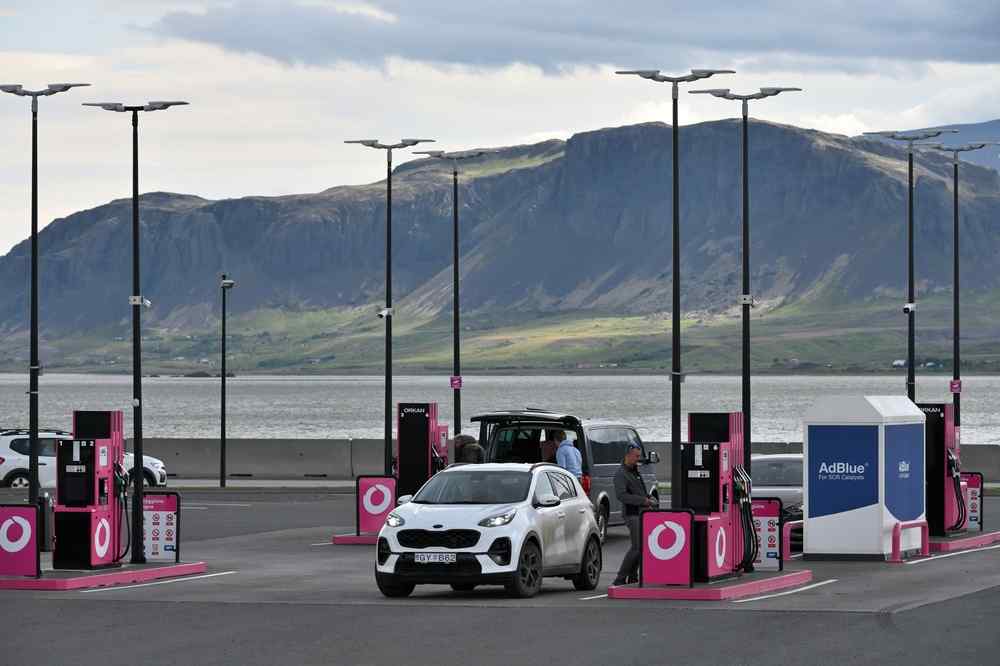
Five days means 4 to 6 hours of driving most days. It's doable; plenty of people do it, but you're committing to a fast pace from the first morning. In five days, you can realistically see the Golden Circle, the South Coast, Jökulsárlón, a few East Fjords viewpoints, Lake Mývatn, and Akureyri. That covers most of the headline stops.
What you give up is everything that needs time. Long hikes are out. Remote detours get cut. The Westfjords aren't happening. And you have almost no weather flexibility, which matters more than people expect, because one bad storm day on a five-day trip wrecks the rest of the schedule with it.
A compact or standard campervan like the Dacia Dokker suits this pace well. You're moving every day, so you want something easy to drive and cheap on fuel rather than a big rig you'll be wedging into tight campsites each night.
If you're working with a tight schedule, our 5-day itinerary shows the fastest realistic way to complete the Ring Road.
7-10 Days: The Recommended Pace
Seven to ten days drops your daily driving to 2 to 4 hours, which changes the whole feel of the trip. You get enough time for the major attractions without rushing past them.
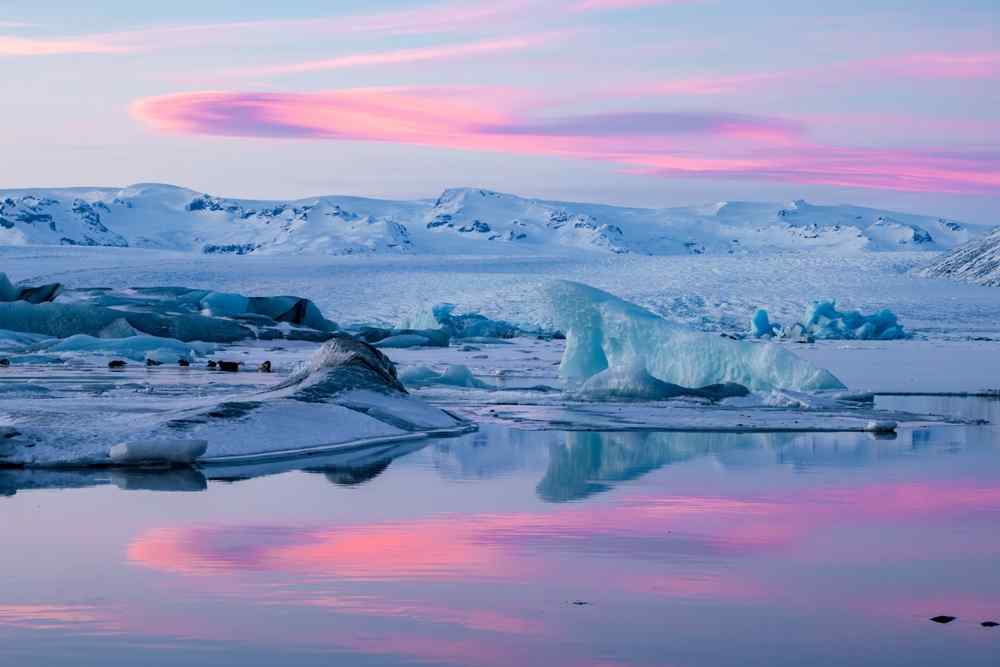
The South Coast, Jökulsárlón, the East Fjords, Mývatn, and North Iceland all fit comfortably, and with ten days, you can usually add Snæfellsnes. The bigger gain is weather flexibility. When a storm rolls in, you can wait it out instead of driving into it on a deadline.
The shorter daily distances also mean less time packing and unpacking and more campsite options each night since you're not forced to reach a specific town before dark. For a first visit, this is the honest answer to how long to drive around Iceland. You see the country properly without turning the holiday into a logistics exercise.
A standard campervan handles this pace well in summer. A 4x4 camper makes more sense outside peak season or if you want access to rougher roads. Travelers with one week available should start with our 7-day itinerary, while those with extra time can follow this 10-day itinerary for a more relaxed pace.
12-14 Days: The Full Experience
Twelve to fourteen days is the least rushed way to drive the Ring Road. Daily driving drops to 1 to 3 hours, and the extra time goes straight into the parts most people wish they'd had more of.
You get room for weather delays without panic. You can spend two nights somewhere you like instead of one. There's time for longer hikes, more photography, and the smaller stops that get skipped on faster trips.
This is where the Snæfellsnes Peninsula earns its place properly, along with the East Fjords side roads, the hot springs, and the scenic detours that aren't on every itinerary. It's slower travel, and the people who pick it are usually the ones who came back from an earlier trip, annoyed at how much they drove past.
Vehicle choice comes down to the season. A standard campervan works in summer. A 4x4 camper is the safer call for shoulder season or the rougher detours. If you’re planning a longer journey, you should also review our guide to Ring Road campsites when mapping overnight stops.
Driving Times Between Major Towns
These are the rough segment times travelers use to plan a day, clockwise from Reykjavík.
|
Route |
Driving Time |
|
Reykjavík to Vík |
2.5 hours |
|
Vík to Höfn |
3.5 hours |
|
Höfn to Egilsstaðir |
3.5 hours |
|
Egilsstaðir to Akureyri |
3 hours |
|
Akureyri to Reykjavík |
4.5 hours |
These times assume normal conditions. The weather can push them up fast. Winter storms in particular can turn a three-hour leg into a half-day problem, or close the road entirely. Fuel planning matters more in the remote stretches too, where stations are spaced far apart, and you don't want to gamble on range.
Before setting off, check our guide to Iceland's gas stations, especially if you're traveling through East Iceland or during winter.
How to Choose Your Ring Road Duration
The right length comes down to how you travel and how much time you actually have. The practical version:
Choose 5 days if:
- Your vacation time is limited
- You're comfortable with long driving days
- You mainly want to see the highlights
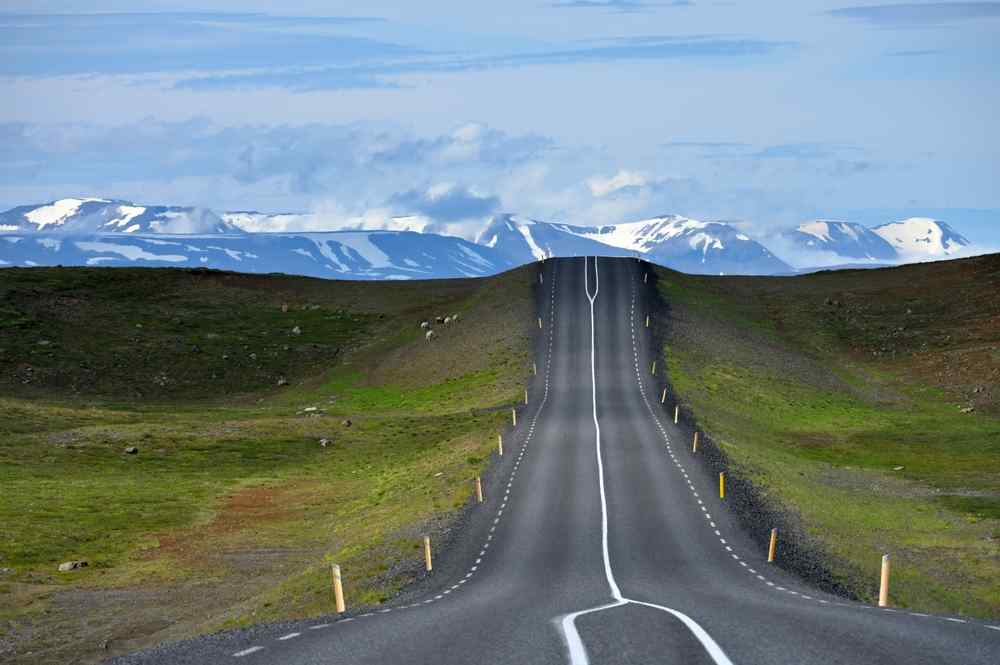
Choose 7-10 days if:
- It's your first visit to Iceland
- You want a balanced trip
- You'd rather have flexibility than a tight schedule
Choose 12-14 days if:
- Photography is a priority
- You enjoy hiking
- You want room to wait out bad weather
- You prefer slower travel
If you can manage it, choose 7 to 10 days. It's the range that works for the most people, builds in weather flexibility, and lets you see the country without spending the whole trip behind the wheel. Five days' work if it has to. Two weeks is better if you've got it. But for most, the week-to-ten-day window is the one worth booking.
FAQs About Driving the Ring Road in a Campervan
How long is the Ring Road in Iceland?
The Ring Road in Iceland runs about 1,322 kilometers (821 miles). It wraps around the whole country, hitting major towns, wild spots, and those blink-and-you-miss-it hidden gems.
Do you need a 4x4 for the Iceland Ring Road?
In summer? No, you are fine without it. In winter? Different story. A 4x4 campervan or car gives you way more grip and peace of mind when roads turn icy or snowy.
Is driving the Ring Road in Iceland worth it?
Big yes. You get glaciers, volcanoes, fjords, black beaches, and waterfalls without trying too hard. If you want Iceland’s greatest hits in one trip, this is it.
What are the disadvantages of traveling in a campervan?
Space gets tight. You have to watch fuel stops, pay for campsites, and deal with the weather. Still, waking up next to glaciers beats staring at hotel wallpaper any day.

Make the Most of Every Kilometer on the Ring Road in Iceland
The Ring Road in Iceland is not just a route. It is the backbone of any great trip to Iceland. You get glaciers, volcanoes, fjords, and tiny villages all in one clean loop.
Taking it slow lets you soak in everything Iceland throws your way. Need a campervan or just a little advice? Reach out to us anytime. We know the Ring Road in Iceland inside and out, and we are always happy to help you plan a trip that feels less like a checklist and more like a story worth telling.


